255 E. Chandler Blvd, Phoenix, AZ 85048


Caffeine levels depend on concentration and dilution ratios rather than brewing style alone. Practically, iced coffee offers fast preparation, whereas cold brew requires advance steeping but yields a long-lasting concentrate. Offering both options caters to diverse preferences regarding acidity, flavor, and convenience.
Both drinks show up cold and over ice, so people use the names like they mean the same thing. They don’t. The brewing method changes the taste, the acidity, and sometimes the caffeine.
Iced coffee is regular hot coffee poured over ice. You brew it at around 200°F, then chill it fast. Hot water pulls flavor out of the beans in a few minutes, including the bright, sharp acids. That gives iced coffee its familiar snap. The tradeoff is dilution. As the ice melts, the cup gets weaker and more watery.
Cold brew skips the heat. You steep coarse grounds in cold or room-temperature water for 12 to 24 hours, then strain out the grounds. Cold water works slowly and leaves most of the harsh acids behind, so the result tastes smoother and a little sweet. A lot of people drink it black because it doesn’t need sugar to go down easy. Notes of chocolate and caramel come through more than they do in a hot cup.
Acidity is the biggest split. Cold extraction pulls fewer of the sour compounds, which is why people with sensitive stomachs often move to cold brew. If bright and tangy is what you want, iced coffee does that better.
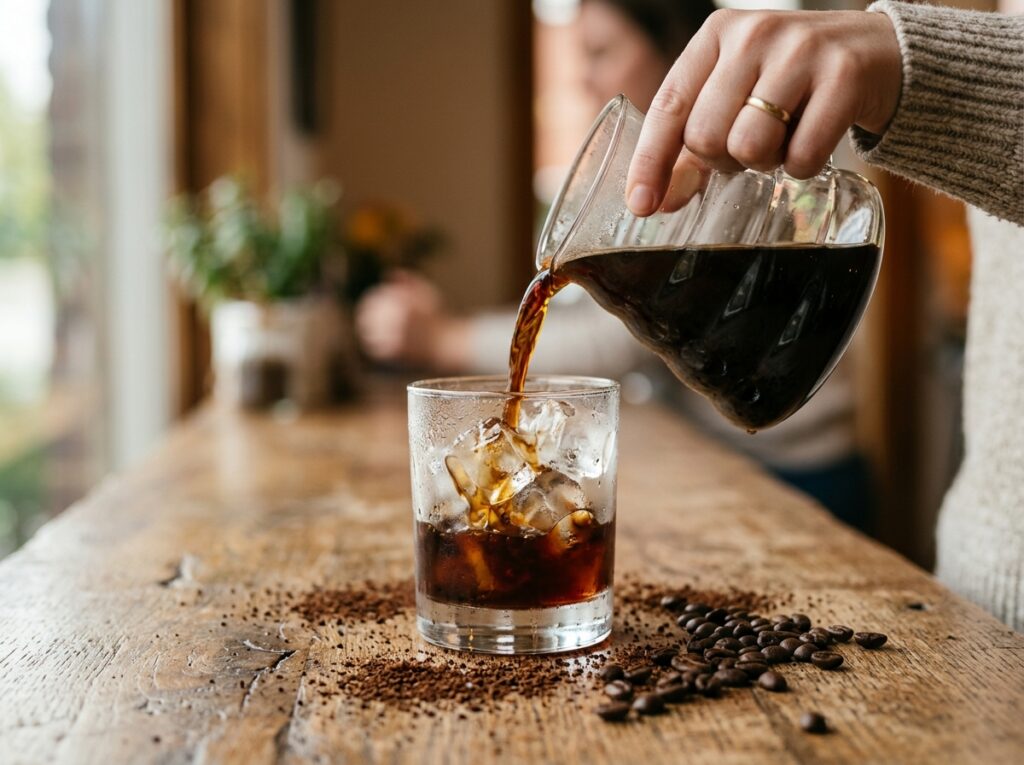
The caffeine comparison gets oversimplified. You’ll hear cold brew is always stronger. A 16-ounce cold brew often lands around 200mg against roughly 160mg for the same size iced coffee, but that’s not a rule. Cold brew starts as a concentrate, and how much you dilute it decides the final number. Steep time and the coffee-to-water ratio matter just as much. A watered-down cold brew can come out weaker than a double-shot iced latte.
There’s a practical side too. Iced coffee is fast, made per cup with gear you already own. Cold brew takes planning, but one batch of concentrate keeps in the fridge for about two weeks, so you pour from it all week.
For Brewed Awakening, both belong on the menu. Send acid-sensitive customers and black-coffee drinkers toward cold brew. Point the people who like a brighter, classic cup to iced. The same beans can taste like two different drinks depending on how you brew them.